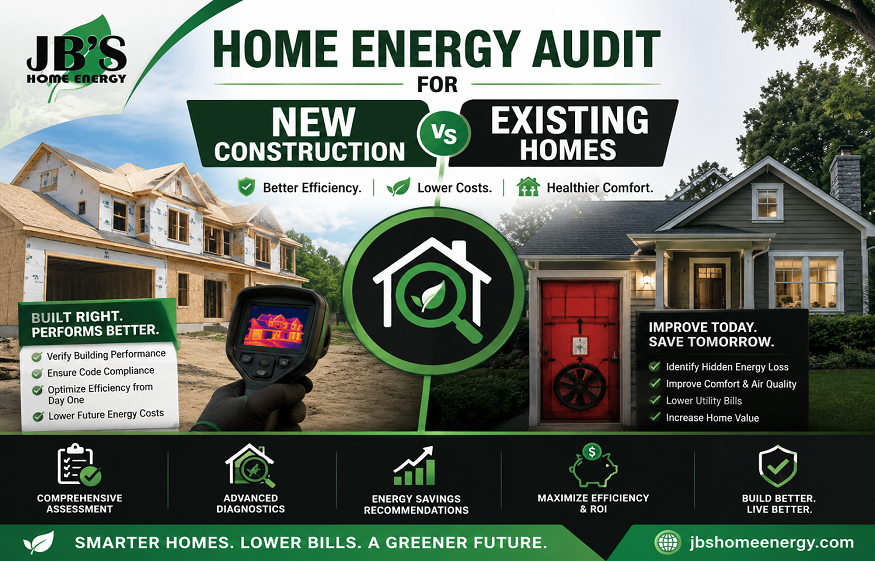
Home Energy Audit for New Construction vs Existing Homes
A home energy audit benefits both new construction and existing homes, but the purpose is different. New homes are evaluated to verify that they meet energy performance standards before occupancy. Existing homes are assessed to identify areas where energy is being lost so improvements can reduce utility costs, increase comfort, and improve efficiency. The right audit depends on the home’s stage, construction quality, and performance goals.
Many homeowners assume a newly built house is automatically energy efficient. In reality, construction quality, insulation installation, air sealing, and HVAC performance can vary from one project to another. Older homes, on the other hand, often develop hidden efficiency problems over time that are difficult to identify without professional testing.
Why Does a Home Energy Audit Differ Between New and Existing Homes?
A home energy audit follows the same basic process in both cases, but the questions being answered are different.
With new construction, the goal is to verify that the builder delivered the level of energy performance shown in the plans and required by local codes. Testing often takes place before the final walkthrough, so any issues can be corrected while crews are still on site.
In an existing home, the focus shifts to identifying problems that have developed over time. Air leaks, compressed insulation, worn HVAC equipment, and duct leakage can all contribute to higher utility bills and uneven indoor temperatures.
What Does a Home Energy Audit Include?
Every property is different, but most professional assessments include several performance tests instead of relying on a visual inspection alone.
Inspectors usually examine:
- Air leakage with a blower door
- Insulation levels throughout the home
- Heating and cooling equipment
- Ductwork performance where applicable
- Ventilation systems
- Windows and exterior doors
- Energy modeling for qualifying projects
A home energy audit in Michigan may focus on reducing winter heat loss, while a home energy audit in Massachusetts often considers both heating efficiency and moisture management because of seasonal climate changes.
A home energy audit in New Hampshire also places significant emphasis on insulation and air sealing due to extended heating seasons.
What Problems Are Common in Existing Homes?
Older homes often develop efficiency issues gradually.
Common findings include:
- Drafts around doors and windows
- Insufficient attic insulation
- Air leaks around plumbing and electrical penetrations
- Duct leakage
- Aging HVAC systems
- Poor ventilation causes uneven temperatures
Many homeowners spend money replacing equipment before identifying the actual source of energy loss. An audit helps prioritize improvements that deliver measurable results.
Expert Insight:
Energy raters often see homeowners invest thousands of dollars in replacement furnaces or heat pumps before checking the condition of the home’s air barrier. In many cases, sealing major leaks and improving insulation noticeably improves comfort without changing the heating system. Testing first helps homeowners spend their renovation budget where it produces the greatest benefit.
Why Are Energy Audits Valuable for New Construction?
A newly finished home can still contain hidden performance issues. Drywall and paint may look flawless while insulation gaps or air leaks remain concealed inside the structure.
Testing before occupancy helps identify concerns such as:
- Incomplete insulation coverage
- Air leakage around framing connections
- Duct leakage
- Ventilation problems
- Areas that fall short of the expected energy performance
Finding these issues before the builder closes the project is usually easier and less expensive than correcting them after the home has been occupied.
Read More: Simple ways to decorate your home for fall
How to Find Local Home Energy Audit Providers
Choosing the right company matters as much as scheduling the audit.
When researching how to find local home energy audit providers, consider these factors:
- Experience with both new construction and existing homes
- Third-party testing capabilities
- Certified energy raters or qualified inspectors
- Detailed written reports
- Clear recommendations instead of generic checklists
- Familiarity with regional building codes
If searching online using terms like home energy audit in Maine, home energy audit in Rhode Island, or home energy audit in Vermont, review the provider’s experience within that state rather than choosing solely by price.
Practical Recommendations Before Scheduling an Audit
Preparing for an inspection helps produce more accurate results.
Use this checklist:
- Gather recent utility bills if available.
- Make note of rooms that feel uncomfortable.
- Ensure access to the attic, basement, and mechanical equipment.
- Share renovation history with the inspector.
- Ask for a prioritized list of recommended improvements after testing.
These small steps help homeowners understand where energy is being lost and which upgrades deserve attention first.
Frequently Asked Questions
Is a home energy audit necessary for a newly built house?
Yes. Construction inspections verify workmanship, while an energy audit confirms how efficiently the home actually performs.
How long does a home energy audit take?
Most residential audits require between two and four hours depending on home size and testing requirements.
Can an energy audit reduce utility bills?
Yes. Identifying air leaks, insulation deficiencies, and inefficient systems helps homeowners make targeted improvements that reduce energy consumption.
Read More: The Beauty and Versatility of Cowhide Rugs in Home Decoration
Final Thoughts
The age of a home tells only part of the story. A newly constructed property still needs verification that it performs as designed, while an older home benefits from identifying hidden sources of energy loss before major upgrades begin. In both situations, a professional energy audit provides information that supports smarter decisions and helps avoid unnecessary spending.
Since 2015, JB’s Home Energy LLC has provided independent energy assessments, air and duct sealing, and third-party rating services for new residential homes and commercial properties across the United States. Homeowners and builders looking for experienced professionals, or researching how to find local home energy audit providers, can benefit from working with a company that bases every recommendation on measured building performance rather than assumptions.